Dmytro Sadchenko · digital systems since 2019
A storefront
that sells.
An engine
you run.Business,
assembled into a system.
Storefront
and engine together.
I put the whole business into one system: a storefront that brings in and serves clients, and an admin panel where you run things. Leads, warehouse, cash desk, payroll, reports.
10 questions · 3 minutes · loss estimate and AI review right away
- 56projects
- 15years in IT
- 5countries

We work with businesses in five countries
The “before” state
The business lives in your head, a notebook and spreadsheets
These aren’t my words. They’re quotes from owners on our first calls, translated word for word — from different countries, different niches, different sizes.
“I’m a guy, a pen and a scrap of paper… I don’t know how much I earn, how much I spend”
“Why is it all a mess? I dished out wages to everyone left and right and I have no idea what I earned”
“He showed me his notebook. I said: bro, you have a half-million-dollar car and you’re running it in a notebook?”
“It’s fully finished and working, very convenient — in the developers’ opinion. That’s why I still keep Google Sheets”
What all four share — not a missing website. A missing system — one that shows the business in numbers and can be run without keeping it all in your head.
We will work out where exactly the money leaks and show you the review
One day
What actually changes
Not “process optimization”, but one real day of a salon owner — before the system and after. The hours are real, taken from work calls.
- 08:40A call: “anything free at two?” — you flip through the notebook while the client waits
- 09:15The client didn’t show. Nobody sent a reminder — that slot went to waste
- 12:00You add up revenue in a spreadsheet. Two numbers don’t match, you hunt for where
- 15:20A stylist asks: “how much did I make this week?” — you count it by hand
- 18:30You reconcile shifts and payroll. Another evening over a spreadsheet
- 21:10You remember you didn’t order supplies. Stock levels are nowhere to be seen
- 08:40The booking came in by itself through the site. The slot is taken, nothing for you to do
- 09:15Reminders went out a day ahead and an hour ahead. The client came
- 12:00Revenue in the panel for any period. It added up by itself
- 15:20The stylist sees their shifts and total in their own dashboard
- 18:30Payroll was calculated from actual shifts. You only check it
- 21:10The system flagged it: stock below the minimum. The order was placed the same day
What I do
One project — two layers. You can’t skip either
A storefront without an engine is a pretty picture that changes nothing inside. An engine without a storefront is a spreadsheet that brings no clients. We build both and wire them together into one system.
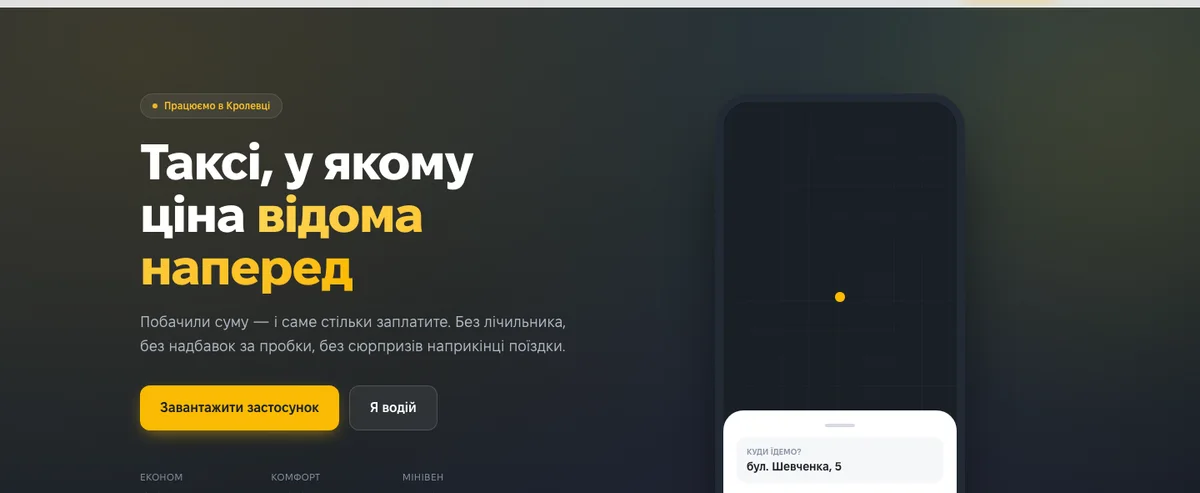
The client sees
- A site or app that works on a phone just as well as on a laptop
- An order, booking or purchase in the fewest steps
- Online payment, a personal dashboard, order status
- The language, currency and quirks of your exact market
You see
- All leads in one place, with history and assignees
- Money: revenue, costs, payroll, debts — in numbers, not by feel
- Roles: a manager sees only their own leads; you see the whole picture
- Reports that build themselves and alerts in Telegram
Projects
You can open it and click around right now
Not renders, not concepts. Working systems that businesses in Ukraine, Poland, the USA and Lithuania use every day.
All breakdowns on a separate page · Here you’ll find 29 breakdowns out of 56 projects — from salons and coffee shops to warehouses, car fleets and learning platforms.
Engine
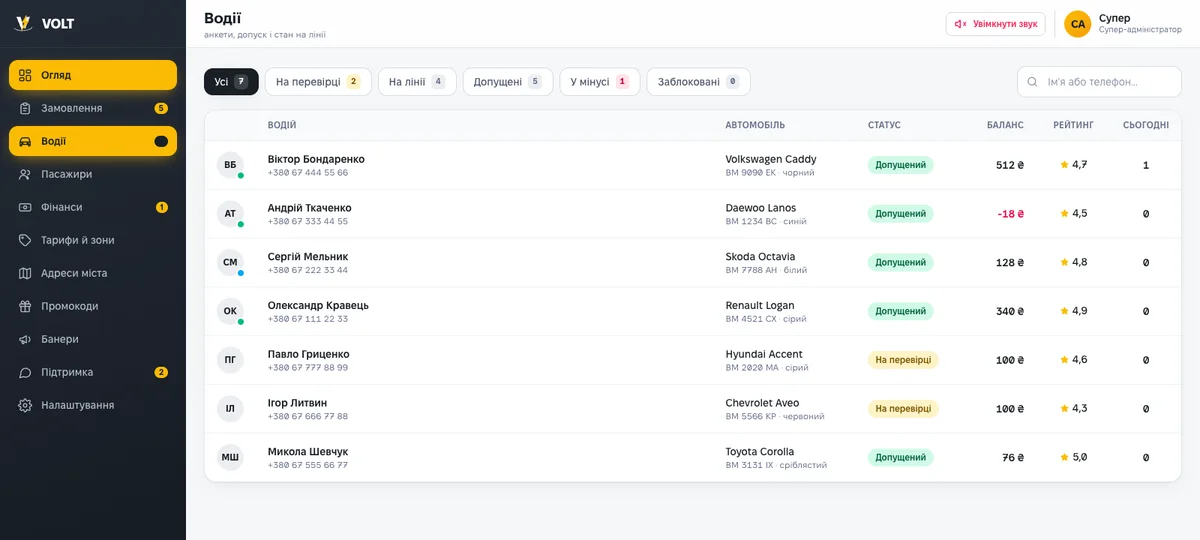
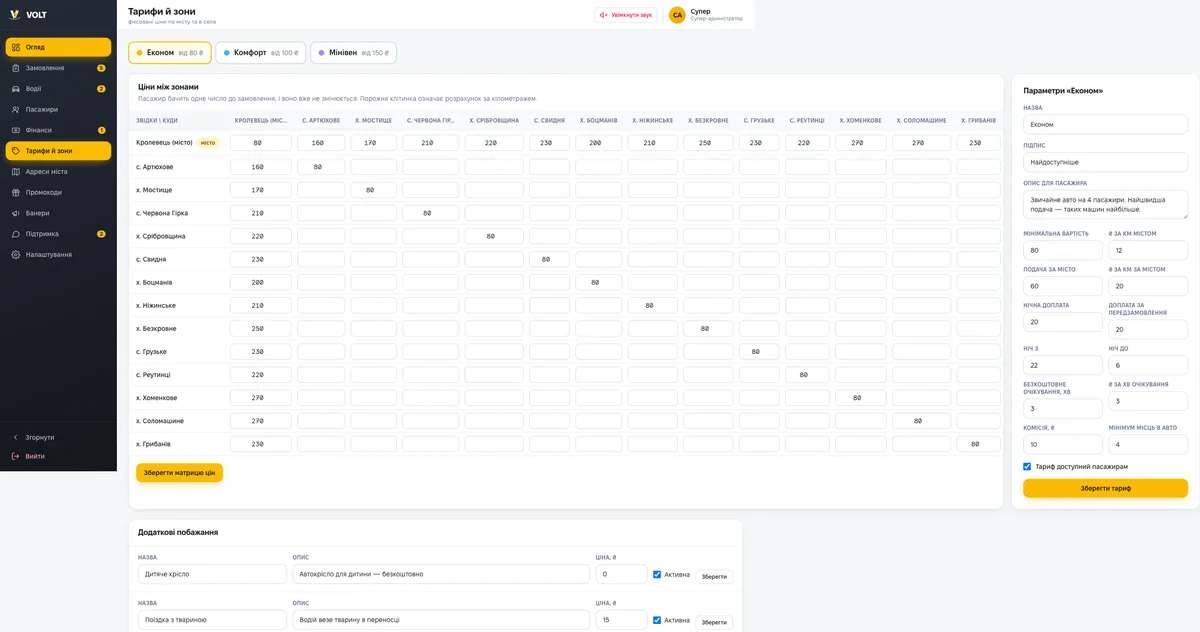
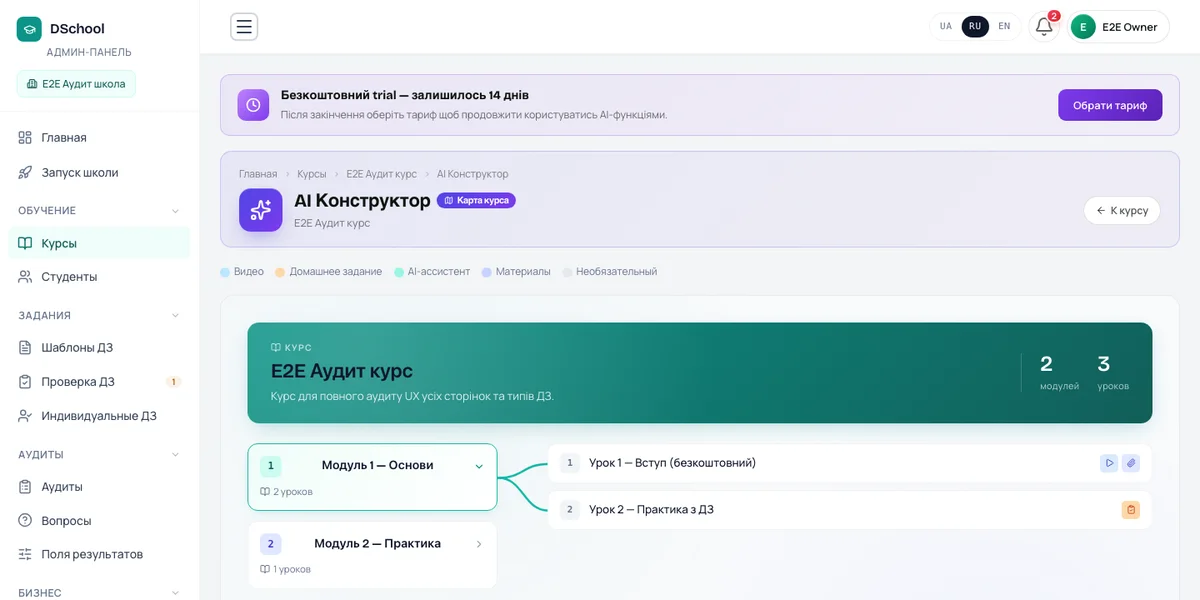
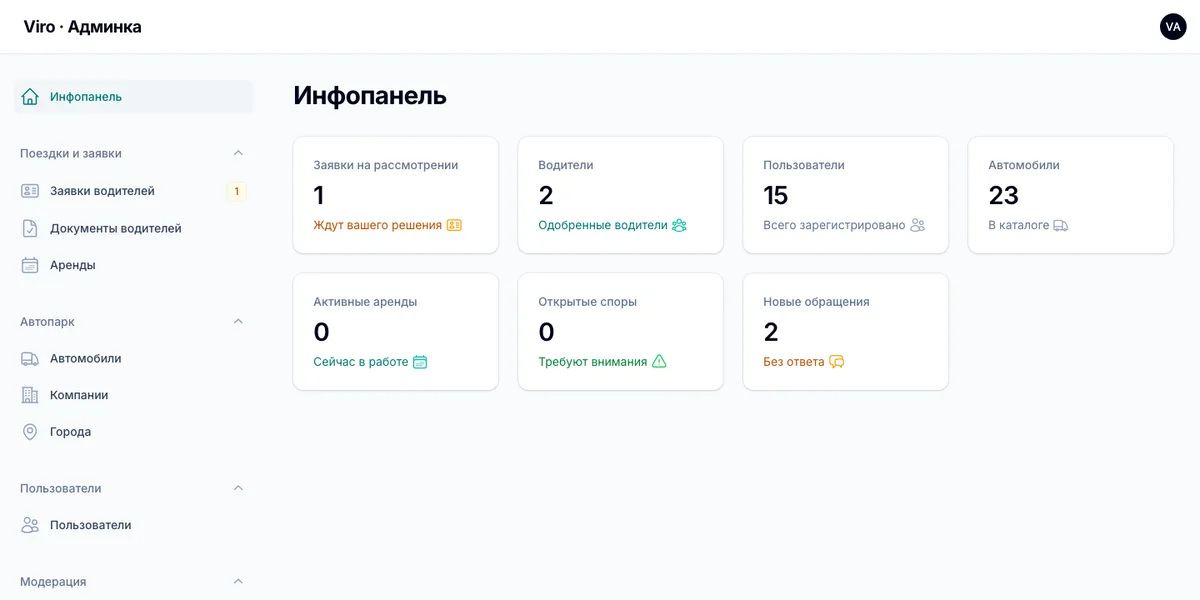
Here’s what the system looks like inside
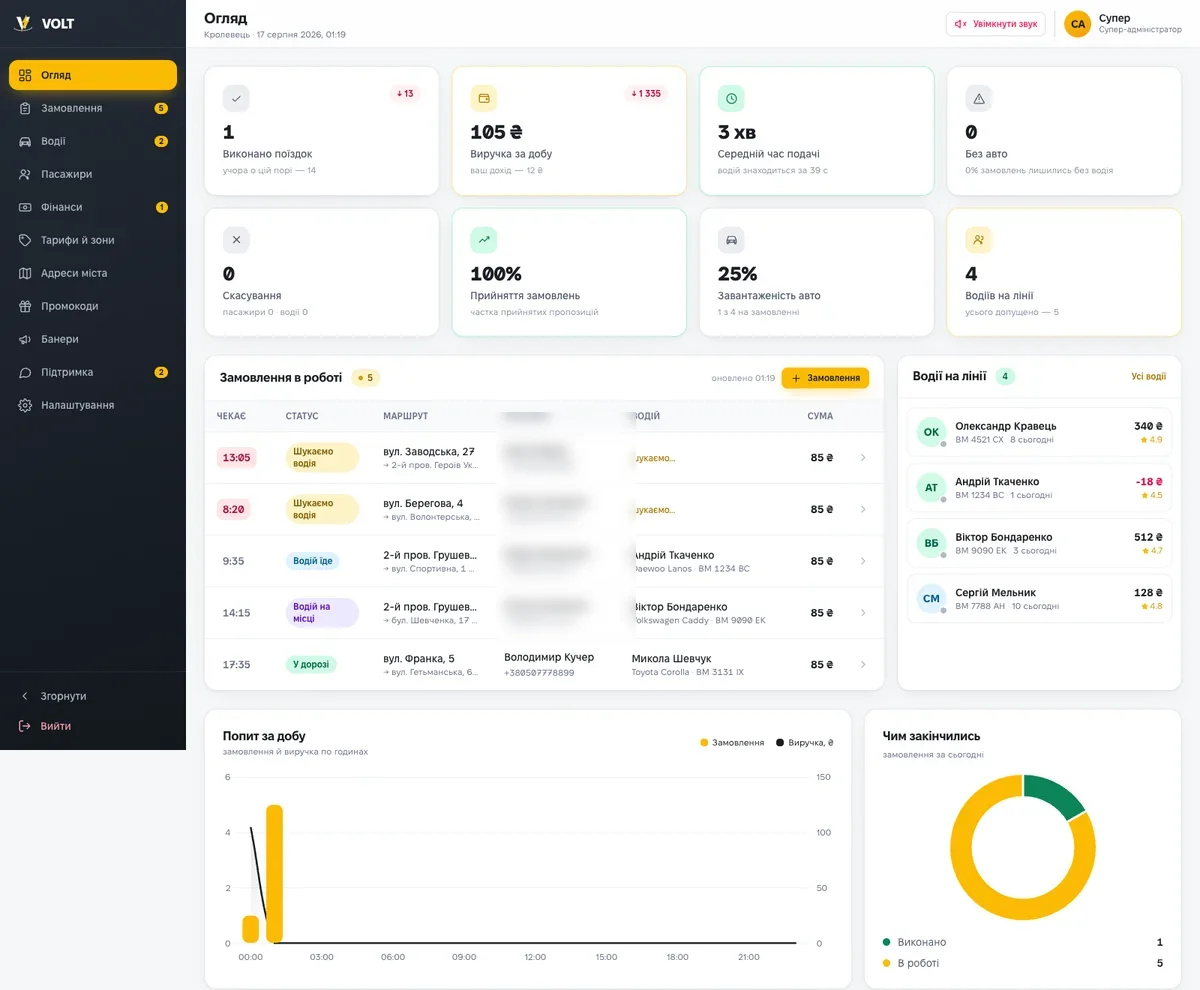
These aren’t mockups — they’re working panels from my projects — with the processes and rules each of these businesses runs on. Client data in the screenshots is hidden.
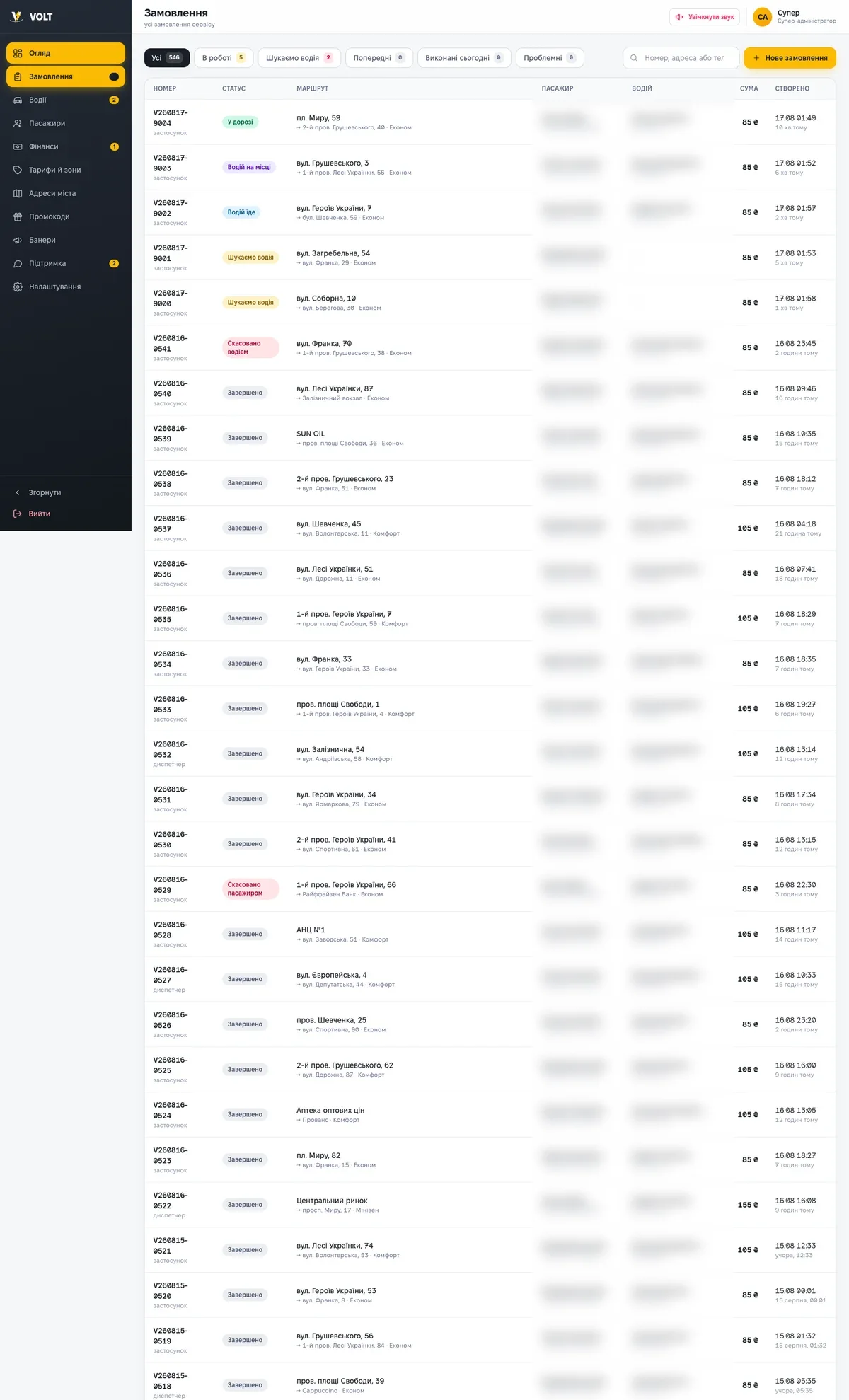
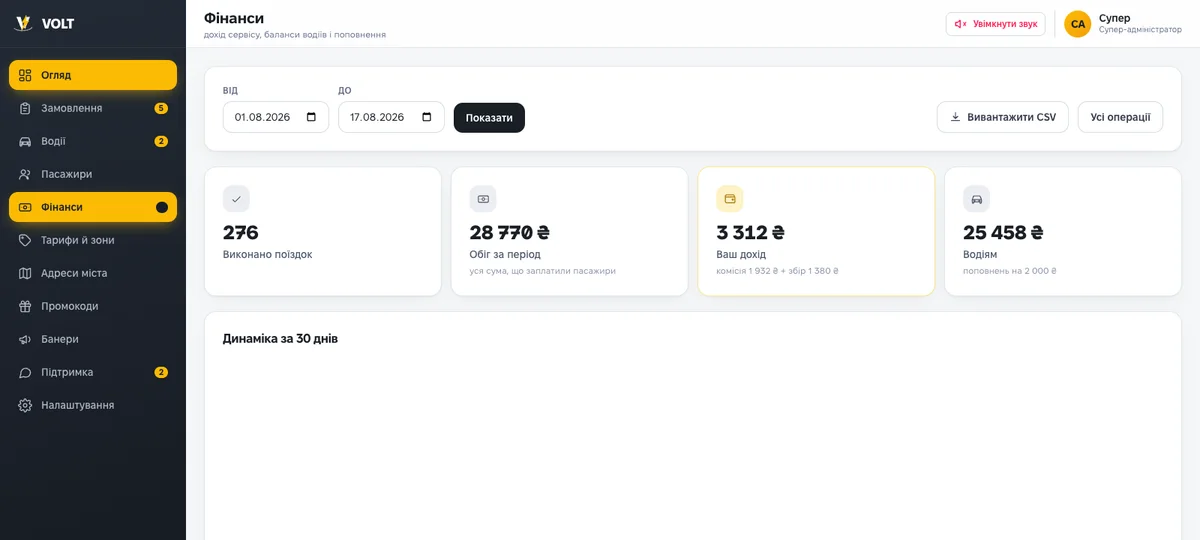
Niches
I’ve already dug into a business like yours
Every niche has its own logic. So instead of adapting someone else’s template, I build the system around the way your process actually works.
Rental and fleet
Bookings, deposits, insurance, service, fines, driver payouts
Taxi and delivery
Dispatch, rates and zones, driver app, payouts
HoReCa
Menu and table orders, kitchen, cash desk, inventory, food cost
Salons and studios
Online booking, stylists, client cards, reminders, payroll
Retail and manufacturing
Catalog, stock levels, orders, production stages, suppliers
Logistics and warehouse
Receiving, putaway, shipping, client dashboard, invoices
Service crews
Sites, work orders in Telegram, daily payouts, the day’s cash forecast
Education
Courses and lessons, homework, student progress, payments, community
Psychologists and coaches
Booking, client dashboard, journals, payments, repeat sessions
Cinema and events
Listings, seating map, seat booking, cash desk, bar
Agencies and studios
Projects, tasks, time, invoices, client reports
Yours not on the list?
Then it will be the twelfth. I’ll figure it out from scratch — working it out from scratch is what I do every time
How I work
Come without a spec
The most common praise from clients sounds like this: “you can work with him without a spec — he pulls the thoughts out of your head and structures them”. That is exactly where I start.
-
00
Take the diagnostic
Step 0 — a 10-question review
Take the diagnostic on the site: I will see your picture before our first conversation
-
01
A talk about business, not about a website
I ask how your money, leads and people are set up and where time is lost every day. No jargon, no “so what is your stack”.
-
02
I fix the scope and the price range
In writing: what is included, what won’t be there, what it costs and where the ceiling is. Before the work starts, not after.
-
03
Clickable prototype
First the part you can open and click through — so you see the system before it is fully paid for.
-
04
Features in parts
I hand it over in blocks so the team gets used to it gradually. “It has to really be three to five buttons” is a requirement, not a nice-to-have.
-
05
Launch and data migration
I move over what has piled up in spreadsheets and notebooks. I train the team. I’m still in touch.
-
06
Growth
Business changes — so does the system. We add modules as you grow instead of rewriting from scratch.
What people say
Word for word, from work calls
“Dima is the only programmer you can work with without a spec. He senses intuitively what I need. He is like artificial intelligence — he already knows you”
“I just stood at a traffic light for 30 seconds — and while I stood there I handed out five tasks”
“Someone has to take all the thinking out of my head and make it real. He keeps pulling the thoughts out of my head and tries to structure them”
“Fast, great and beautiful. Honestly impressive”
“They are enjoying this platform so much now. The tester says: this is just something where everything is convenient”
Economics
The system is your asset, not a rental
Off-the-shelf services charge every month and get pricier as you grow. On top of that they are built for a standard way of working — so the business adapts to the software, not the other way around.
Real math from a talk with a salon chain: the off-the-shelf service they were on cost $120 a month, their own system — about $10 a month for hosting. The difference is that the second one is also built the way this exact business works.
Off-the-shelf subscription
- A payment every month, forever
- Price grows with the number of employees
- The process adapts to the software
- Data on a server you don’t own
- The feature you need may never appear
Your own system
- Development once, then just hosting
- Any number of users
- The software is built for your process
- The server, code and data are yours
- I just add the feature you need
Do the math on your numbers
Rates from a real salon chain case: off-the-shelf $12 per person per month, own server $10 per month in total. The cost of the development itself we discuss separately — it differs for every process.
Formats
What it costs
We show the ranges up front — so you know the ballpark before you’ve even written to us. The exact number comes after a talk about your processes.
First launch
from $2 500
2–3 months
When you need to go live fast and check that the system sticks.
- A site or app for clients
- Admin panel with basic sections
- Lead intake and notifications
- Data migration from spreadsheets
- Team training
Full system
from $8 000
4–6 months
When the business already runs and bring every process into one system.
- Everything from the previous format
- Modules for your niche: warehouse, cash desk, payroll, roles
- Online payments and fiscal receipts (Ukrainian PRRO)
- Telegram bot or Mini App
- Reports and analytics
- API integrations
Platform
from $15 000
from 6 months
When there are several systems, many users and complex processes.
- Several roles and dashboards
- Mobile app for iOS and Android
- Multiple languages and currencies
- AI assistants inside the processes
- Complex integrations and data exchange
The exact number appears after the first talk — together with the project’s scope and budget ceiling put in writing. Payment in stages: 30% at the start, 40% at the working version, 30% at launch. Support and growth are separate, billed monthly.
Next step
Tell me how your business works
The first talk is free and doesn’t commit you to anything. We ask about processes, not about technology — and right there it becomes clear what can be automated first and what is better left alone.
- No spec needed — we’ll write it together
- If a ready-made service would solve it cheaper, I’ll tell you straight
- After the talk — scope of work and price range in writing
Don't feel like writing? Take the diagnostic — the estimate and the review will reach me on their own
Questions
The things people ask most often
I don’t know what exactly I need. What should I come with?
With nothing. Come with the way the work runs now: where you keep records, where leads come from, who is responsible for what, what annoys you most. The spec is our part of the job, not yours.
I have already paid developers and nothing came of it
That usually happens when the scope isn’t fixed in writing and everyone pictures the result differently. So I fix it before the start: what is included, what won’t be there, what it costs and where the ceiling is. And every project on this page can be opened and checked yourself.
My staff don’t like change. Will they handle it?
That is why the features are handed over in parts and the worker interface is kept as simple as possible: a person sees only what concerns their job, usually just a few buttons. The full picture is yours to see.
Why build my own system when ready-made CRMs exist?
If a ready-made service covers your process — take it, and we’ll say so. You need your own system when the process doesn’t fit a standard workflow, when the subscription grows with the team, or when the site, accounting and messenger have to be stitched into a single system.
What happens to the data already piled up in spreadsheets?
We move it. In one project we migrated a Google spreadsheet of 21 sheets with 16 macros and a history of tens of thousands of rows. The import is always tested on the real client file before launch.
Who owns the system after launch?
You do. The system is deployed on your server, the access is handed to you. After that you pay only for hosting — and for further work, if you need it.
Do you work only in Ukraine?
No. The projects include a car rental and a fulfillment warehouse in the USA, a car-rental marketplace in Poland, an art studio in Lithuania. We work remotely, keeping in touch over video.